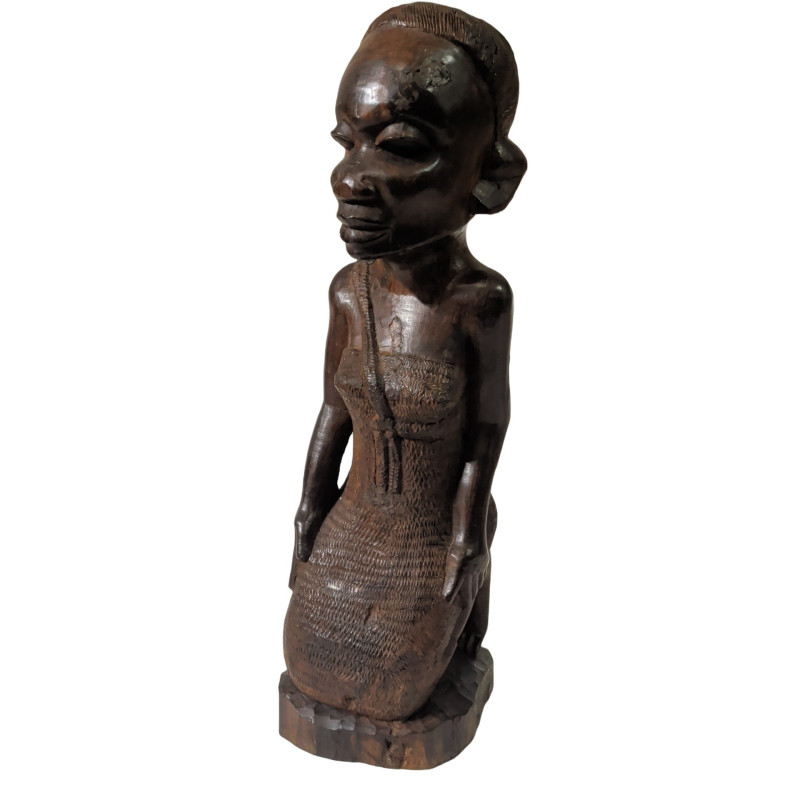
Ebony figures are among the finest works of African carving. Because the wood is rare and valuable, there are also many figures made of light wood that have simply been dyed black or polished with shoe polish. These five signs tell you what you are holding.
1. The weight
Ebony is one of the heaviest woods in the world. A genuine figure feels much heavier than its size suggests. Many types of ebony are so dense that they do not float in water.
2. The colour
Real ebony is dark all the way through: deep black or blackish brown, often with fine dark brown streaks. Many carvings also have a light edge of sapwood, which carvers use deliberately as a contrast. If a figure is evenly matt black all over, it has often been dyed.
3. The grain
The pores of ebony are very fine and barely visible. Clearly visible, coarse wood fibres under a black surface point to dyed wood.
4. The surface
Because of its density, ebony can be polished almost like stone. It takes on a natural, silky sheen and feels cool and smooth. If the colour comes off on your hands or the figure smells of shoe polish, be careful.
5. The scratch test
In an inconspicuous spot, for example on the underside, a tiny scratch shows what lies beneath: with real ebony it stays dark. If light wood appears, the figure has only been dyed.
Good to know: ebony and mpingo
Many African carvings, especially from Tanzania and Mozambique, are made of mpingo (African blackwood). In the trade it is usually also called “ebony”. It is just as heavy, dark and fine, and one of the most valuable woods of all.
How to care for your ebony figure
- Dust with a soft, dry cloth.
- Once or twice a year, rub in a thin layer of colourless furniture wax or a little wood oil and polish.
- Do not place it right next to a radiator or in direct sunlight, otherwise the wood can crack.
- Do not use water or harsh cleaning agents.
Ebony figures at orientcrafts
Our ebony figures come from Africa and were carved by hand. A few examples:
You will find all pieces in our Ebony figures category.